
A personal loan can help spread a planned expense across monthly repayments. But before comparing offers, there's a practical detail to check: whether you'll need to move the account that receives your salary.
Imagine you've used the same account for years. Your salary arrives there, and you've already set up payments for rent and household bills. You find a loan offer from another bank, but it requires salary transfer. You now need to compare the borrowing cost and what changing your salary account would involve.
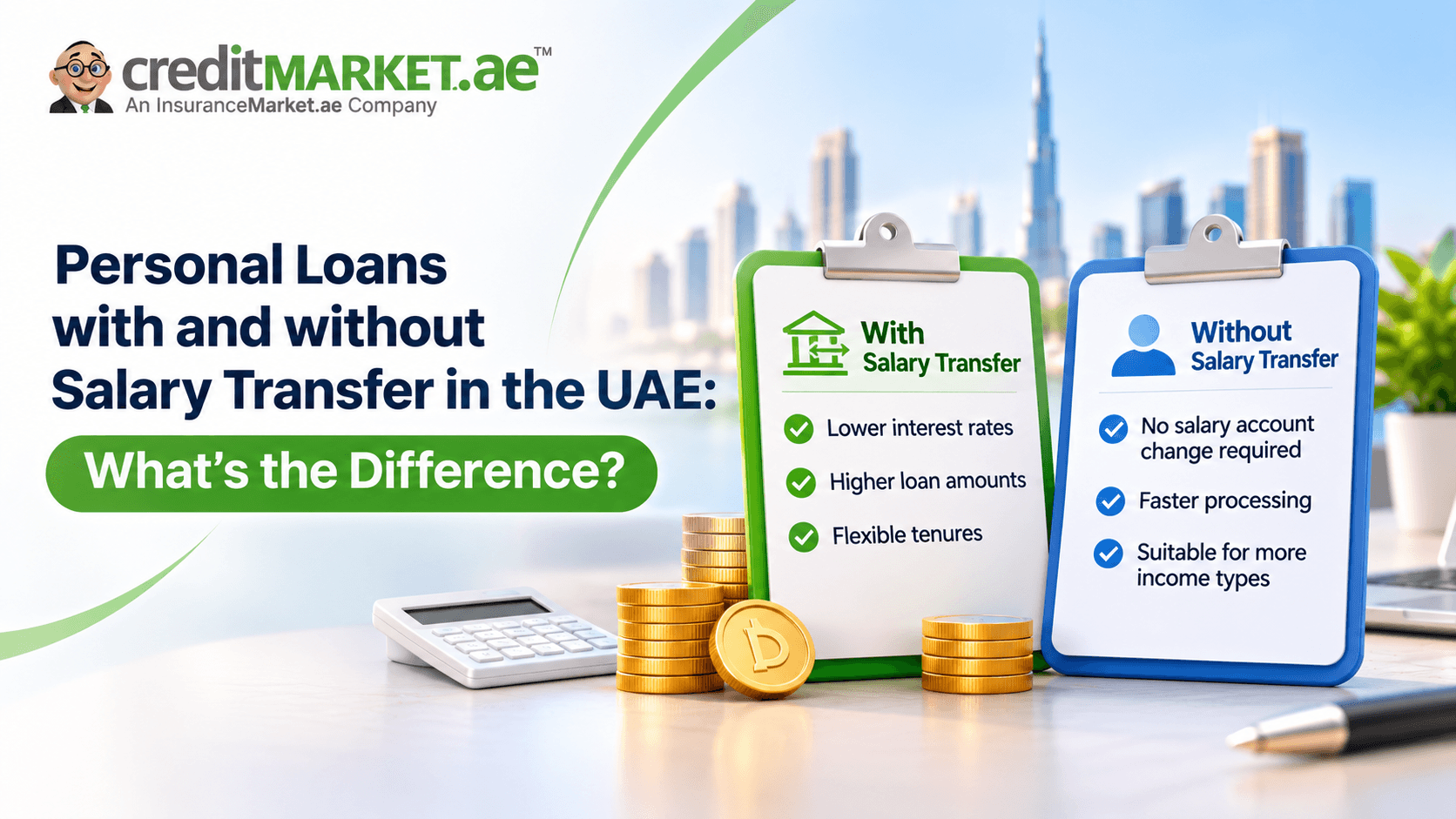
In the UAE, personal loans are available with and without salary transfer, subject to the bank's criteria. The main difference is whether the lending bank requires your salary to be paid into an account with it.
What salary transfer means for a personal loan
With a salary transfer personal loan, your employer pays your salary into an account with the lending bank. The bank may require an employer letter confirming that arrangement and an undertaking relating to end-of-service benefits. Read the required letter before asking your employer to sign it.
If your salary already goes to the lending bank, ask what paperwork is still needed. Receiving a salary into the account doesn't establish that every loan condition has been met.
Salary certificate and salary transfer letter
A salary certificate confirms employment and income details. A salary transfer letter includes the employer's commitment to pay salary into the specified account. Its wording can include conditions about changing that arrangement or handling final employment payments.
Ask the bank which document it needs, then share its required format with your HR or payroll team. Don't assume a certificate confirming your salary also commits your employer to transfer it.
How a personal loan without salary transfer works
A personal loan without salary transfer lets you borrow without moving your salary to the lending bank, subject to the loan's terms. You still need to arrange the monthly repayments.
Depending on the offer, repayment can involve a direct debit or a separate account with the lending bank. Some loans without salary transfer require a new repayment account and verification of your income. Keeping your salary account doesn't remove those conditions.
Before applying, establish which account will fund the instalment and when it needs enough money. If you must transfer funds between accounts, plan around the repayment date rather than leaving it until the payment is due.
Difference to Compare:
With salary transfer
Salary account - Salary must reach an account with the lending bank under the required arrangement
Employer paperwork - A salary transfer or assignment letter may be required
Repayments - Check collection arrangements on the salary account
Eligibility - The bank assesses the application against its lending criteria
Costs - Compare the rate, fees and total repayment in your offer
Without salary transfer
Salary can remain with your existing bank
Salary transfer isn't required, but employment and income checks can still apply
Check the direct debit or repayment account requirements
The bank assesses the application against the selected loan's criteria
Compare the same figures for the same amount and repayment period
These differences don't establish which offer is suitable for you. Salary transfer alone also doesn't guarantee approval. The bank still assesses the application
Eligibility and documents
Banks assess more than where your salary is paid. Your income, employment details and credit history can affect the application. They also consider existing borrowing when assessing repayment capacity.
Check the selected loan's minimum income and employer requirements. An income threshold listed for one product isn't a rule for every personal loan in the UAE.
Depending on the loan and your circumstances, application documents can include:
A valid Emirates ID.
Passport and residency documents, where applicable.
A salary certificate or other income evidence.
Recent bank statements.
A salary transfer letter, where required.
The bank can request additional documents. Use its current application checklist instead of assuming every item is required for both loan types.
If you choose a loan without salary transfer, confirm how the bank will verify your income. A digital process can reduce paperwork while still requiring income checks
Comparing the cost of both options
Ask for offers based on the same borrowing amount and repayment period. Otherwise, a smaller monthly instalment could reflect a longer repayment schedule rather than a lower cost.
Read the Key Facts Statement, the document setting out the loan's main terms and costs. Compare the monthly instalment and total amount repayable. Then check processing fees, any applicable insurance costs and charges for early settlement. Account conditions deserve a separate check if the loan requires a new account.
A simple repayment comparison
Consider two illustrative offers for an AED 50,000 loan over 24 months. These figures explain the comparison method; they aren't current bank quotes.
One offer has 24 monthly instalments of AED 2,300. Those payments total AED 55,200. The other has 24 instalments of AED 2,400, totaling AED 57,600.
The AED 100 monthly difference becomes AED 2,400 across the repayment period. Compare fees separately to see whether they change the result. Confirm which charges are already included, so you don't count them twice.
Comparing interest rates
A flat rate calculates interest using the original loan amount. A reducing rate calculates interest using the outstanding balance as it falls. Don't compare the two percentages as though they use the same calculation.
Ask the bank for the repayment schedule and the annual percentage rate, or APR. APR includes interest and standard borrowing costs, which helps you compare offers beyond the advertised rate.
Choosing an option that fits your banking arrangements
Return to the customer who already has rent and household payments arranged through an existing account. Keeping that salary account may be convenient, but the cost comparison still needs to use actual loan offers.
If you're considering salary transfer, ask your employer whether it can provide the required letter and when payroll details can change. Check which existing payments you'd need to move or continue funding from another account. Ask the bank how salary credits and the first instalment will be coordinated.
If you're keeping your salary account, confirm how you'll fund repayments. Check whether you need a new account and whether any account fees or balance conditions apply. Set the transfer timing around the instalment due date.
Before committing, ask what your loan agreement requires if you change jobs or later want to move your salary. Get clarification on the employer undertaking and any release or clearance process before changing the arrangement.
Comparing personal loans online
Use CreditMarket.ae to explore options with or without salary transfer. Share the requested employment, residency and income details, then compare matching loan information and the salary transfer conditions.
Review the selected bank's documents before applying. Checking eligibility through the platform is separate from final bank approval, and the final rate and terms depend on the bank's assessment.


